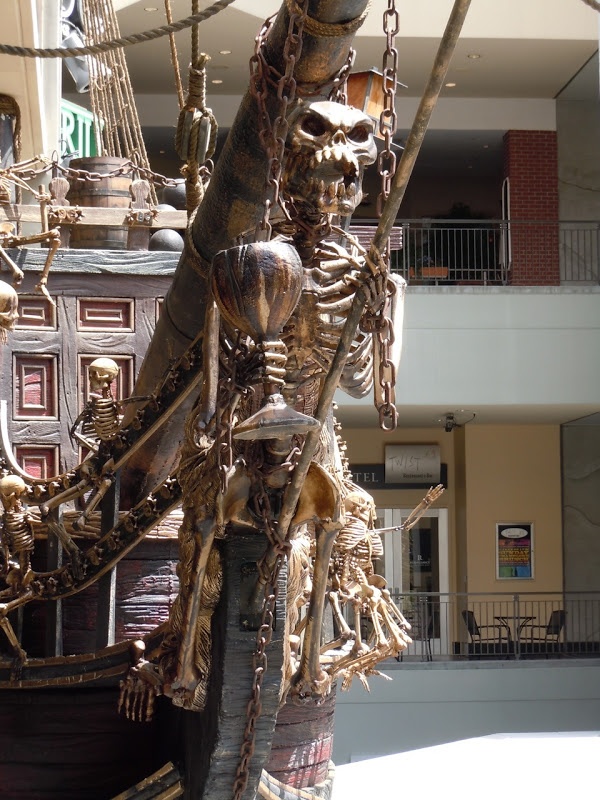
I’ve been plunderin’ and pillagin’ my way through the East Indies ala the Ubisoft video game, Skull and Bones, and part of that experience is ship cosmetics. Aye, outfitting your ship with guns, mortars, and oil barrels is essential to your success, but the look of your ship is (apparently) JUST as important. I don’t necessarily disagree with Ubisoft. I have enjoyed outfitting my ships, but…there are SO SO many ship cosmetics. Almost too many.
One of these many ship cosmetics in Skull and Bones is ship figureheads. So, I started wonderin’ and so I went a plunderin’…and this is what I’ve found.
Ship figureheads were part of ship fashion during the Golden Age of Piracy for certain, but ships have been painted or mounted with these types of objects for centuries. Figureheads were for ship identification, (name, allegiance, etc.), but they also have their roots in seafaring magic and superstition.
The Mediterranean seagoing folks waaay back-when would paint eyes on their vessels as a magical talisman for the ship to reach its destination safely. The Vikings would place carved wooden dragons, boars, or other ferocious beasties on their pillagin’ and plunderin’ vessels to arouse the spirit of the beast to aid them. Sailors from Germany, Belgium, and the Netherlands believed that a spirit called a Kaboutermannekes was housed in the figurehead and had the power to protect the ship and its crew.
In the 16th – 19th centuries, there were LOTS of unicorns, saints, lions, and other patriotic emblems adorning ships. At some point, the figureheads were nicknamed “Neptune’s Wooden Angels”, (a Christian effort to make sailor superstition less Pagan? Did Neptune have angels? I don’t think so.)

However, as the figureheads became more elaborate and larger, they became a bit of a sailing disruption: Their weight made the bow of the ship quite heavy which affected speed and seaworthiness in general. Slowly but surely, ship figureheads were replaced with badges and emblems.
It’s worth mentioning the ship, Cutty Sark, while we’re plunderin’ these figureheads. This ship was built in 1869 and was one of the last of the “tea clippers”, (REALLLLY fast ships). The figurehead is a gorgeous white carving of a bare-breasted woman holding a horse’s tail in her hand.

The woman is a fictional witch, Nannie Dee, who stars in the 1791 poem Tam O’Shanter by Robert Burns. In the poem, Nannie and her witch sisters are dancing the night away when they are spied upon by a mortal man named Tam O’Shanter. Tam is so…erm…happy to see the witches dancing that he bellows, “Weel done, Cutty-sark!”. The witches, unlike Tam, are not happy to see him. Nannie pursues Tam relentlessly and nearly snatches him, but instead gets a handful of Tam’s horse’s tail. Tam narrowly escapes to safety across a river.
Why did Tam yell, “Weel done, Cutty-sark”? Probably because Nannie was dancing her witchy jig in a skimpy undergarment that Scottish folks call a “cutty-sark”. So, Tam wasn’t really praising Nannie’s dance moves; moreso, his outburst was an expression of admiration for her dancing attire.
Finally, (this plunderin’ is making me thirsty!), the BIG question: What figureheads did PYRATES have on their ships?
Sadly, since pyrates usually captured their ships, (Stede Bonnet excluded), choosing the perfect figurehead was not really something a pyrate did. They could certainly keep whatever figurehead might be on a captured ship, but it’s doubtful that they made having figureheads on their ships a priority. Disappointing, I know.
Sigh.
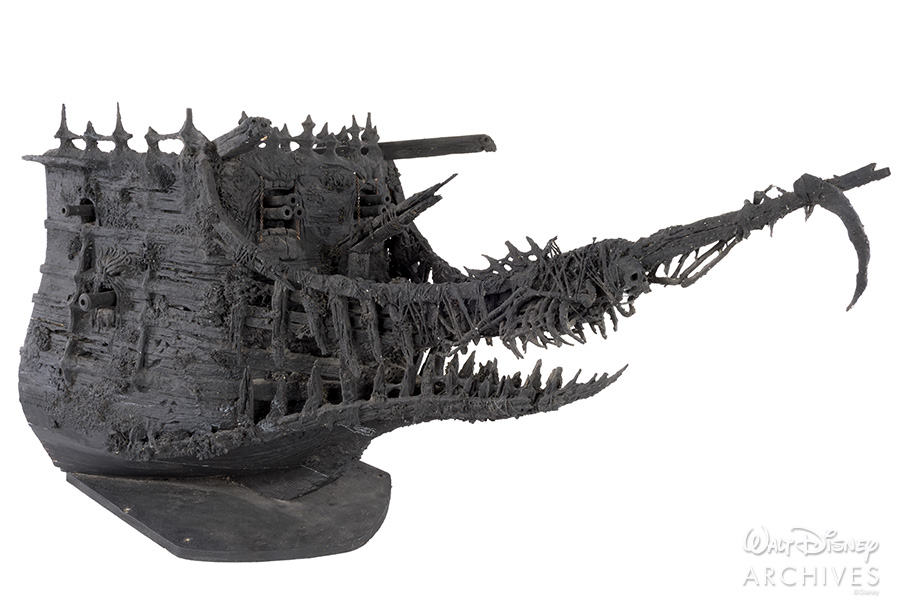
So, let’s not end on a disappointing note. Here are a few modern pyrate figureheads for ya to admire: The Disney rendition of The Flying Dutchman with a very large and frightening figurehead:
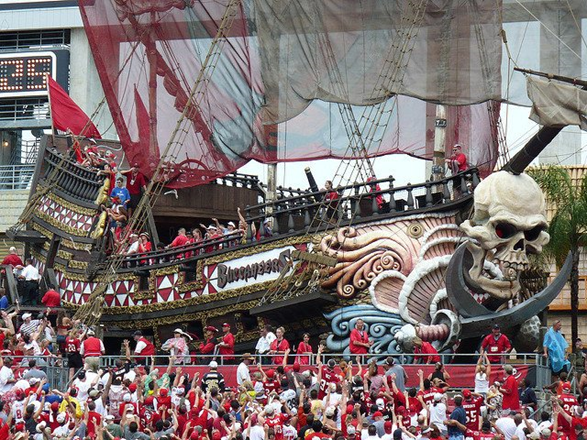
And the Tampa Bay Buccaneers NFL football team has an impressive figurehead. Look at that skull!!
And now, raise your glass, mug, tankard, (or pyrate coffee cup) for a proper toast to end this week’s plunderin’…HUZZAH to figureheads!! Unicorns, witches, dragons and more!
Next time Ali Bitchin…until then, keep plunderin’!
 Virginia Chandler
You must be logged in to post a comment.