Yes, Bootstrap Ginny, pyrates loved to smoke. An excavation on the Caribbean Island of Barcadares revealed that “…Pipes (made) make up 36 percent of the artifacts found at the pirate site, compared with 22 percent at the Ridge Complex and 16 percent at Port St. George.”
https://www.livescience.com/15866-caribbean-pirates-archaeology.html
Pipes and cigars were the preferred methods of smoking; but, putting some snuff right up your nose would also give pyrates (and others) a nice nicotine rush. Pipes were usually packed with crushed tobacco leaf, cigars were frequent plunder from Spanish ships, while snuff was a more refined tobacco habit which used finely ground tobacco kept in (sometimes rather lavish) snuff boxes.
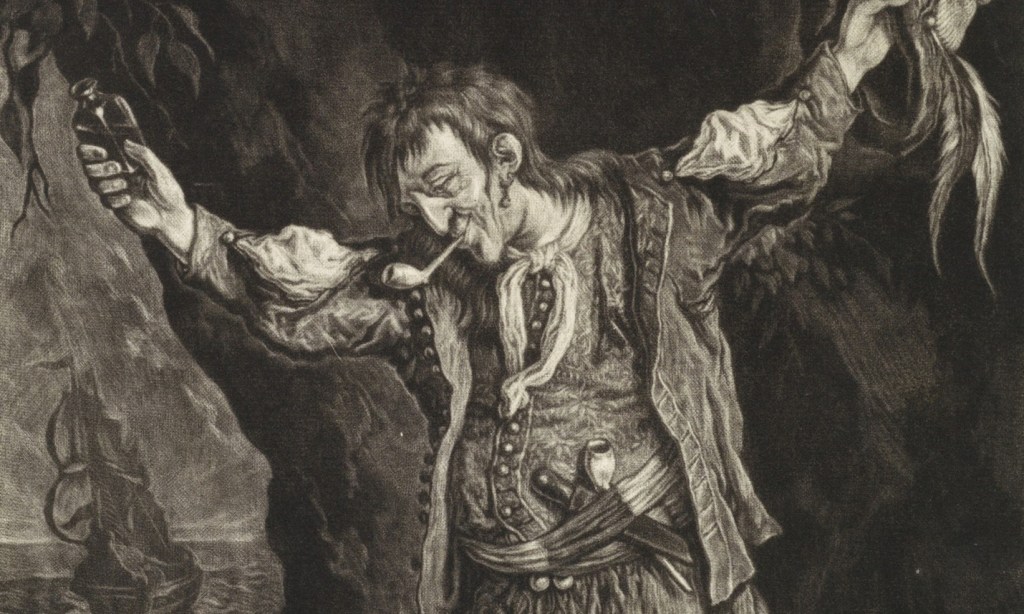
“Sea captains distributed tobacco to boost crew morale, a safer alternative to excessive drinking. Pirates, characterized by sunburn, voracious drinking, and chain-smoking, turned their ships into aromatic havens of adventure. From white clay pipes imported from Europe to improvised creations using coconut shells or crab claws, the pirates’ love for tobacco found diverse expressions.”
For more information about pyrates and tobacco, visit: https://www.ancient-origins.net/videos/pirates-tobacco-drugs-video-0020144
You may also wonder, (as did I), were other substances smoked by pyrates? Like, opium or cannabis? (Asking for a friend.) The short answer is, “yes”. Just like pyrates would pretty much drink whatever adult beverage was readily available/recently plundered, it can be assumed that pyrates probably packed their pipes with delicacies from both the Caribbean and the Indian Ocean when they had the opportunity. The difference in choice of vice likely being that tobacco was easily obtained, while cannabis and opium were a bit more exotic and not readily available at your local pipe shop. In other words, in all likelihood, neither opium nor cannabis were frequently smoked by pyrates.
Interesting Sidenote: Discovered in the wreck of Queen Anne’s Revenge were (and they’re still finding them) clay pipe fragments. Many, many pipe fragments. They haven’t put the fragments all together for an accurate count, but there was definitely a smoker’s club on Blackbeard’s flag ship.
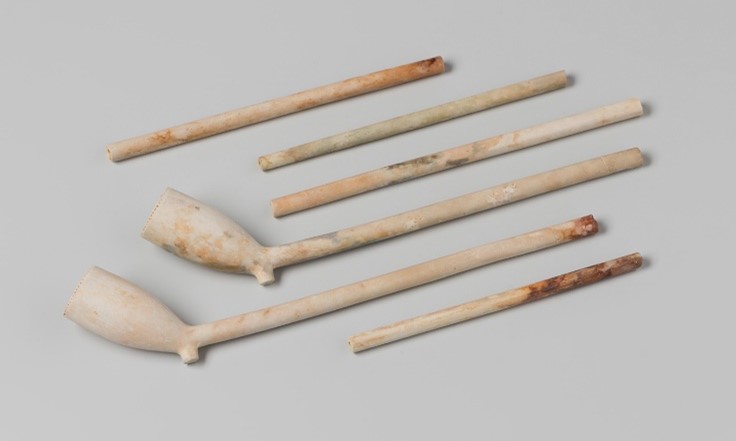
For more about Blackbeard’s pipes, go here: https://www.qaronline.org/blog/2021/09/01/artifact-month-pipe-stems
As much as pyrates (apparently) loved smoking, they all knew the number one rule of smoking on board the ship: NO SMOKING BELOW DECKS. Why? No, it wasn’t because of secondhand smoke health concerns; it was because of the gunpowder stored in the lower decks. Lots of gunpowder. Hence, no sparks, flames, or fiery tempers below deck! Else, all go BOOM and ship go down. Savvy? Punishment for smoking in unauthorized spaces could also result in quite harsh and cruel punishments. Dutch privateers in the early 17th century had very strict rules:
“Tobacco smoking was closely regulated on board ships, less because of health issues as because of fire hazards. The earliest Dutch maritime tobacco regulation, from a fleet of privateers in the Caribbean, dates from 1627, and specifies that the sailors could only smoke on the wooden railing before the main mast (the so-called boevenet or ‘villains net’), where in daytime a burning fuse was hung. On a first violation of this regulation the hapless smoker was placed in irons for eight days and formally reprimanded. If he broke the regulations again he was (sic) hung from the yardarm and then flogged, in addition to losing a month’s wages. At night smoking was completely forbidden and the sentences were doubled. By comparison, getting drunk was punishable with 14 days on bread and water.”

Clearly, while at sea, it was better to drink than to smoke! So, on that note, let’s end this plunder and have a grog! If there’s no gunpowder stored nearby, go ahead and pack that pipe while you’re at it! What you pack it with is your own private pyrate business, savvy? Huzzah!
 Virginia Chandler
You must be logged in to post a comment.