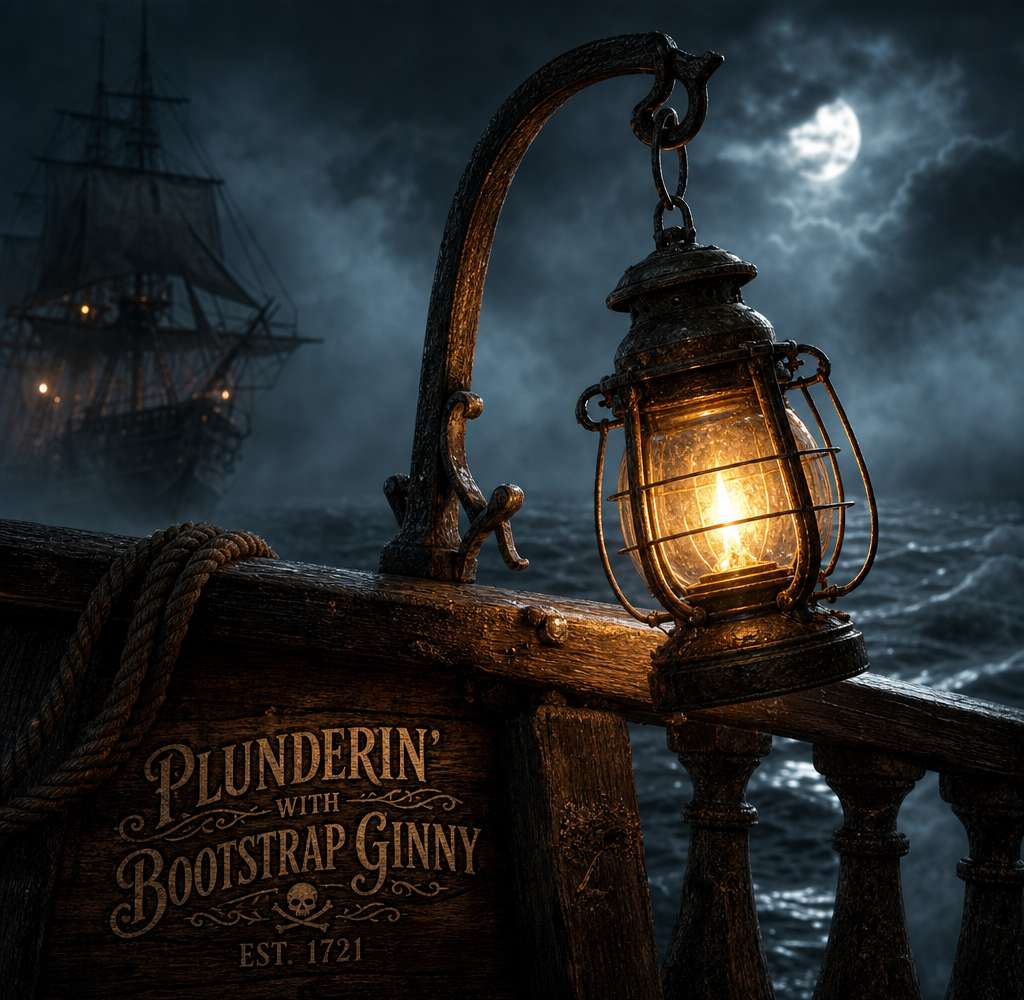
The Caribbean had scarcely recovered from the shock of Black Bart’s Ears‑and‑Execution Affair when a darker tide rolled in from the Atlantic. Whispers carried his name long before his sails appeared — a thin, jagged syllable spoken with the same dread reserved for storms and devils.
Ned Low, born in Westminster in 1690 and hardened by poverty, thievery, and loss, was no ordinary marauder. He was a man shaped by violence long before he ever hoisted a black flag. His wife had died in childbirth in 1719, leaving him with an infant daughter — one of the few human regrets he ever admitted. Everything else in him was sharpened for cruelty.
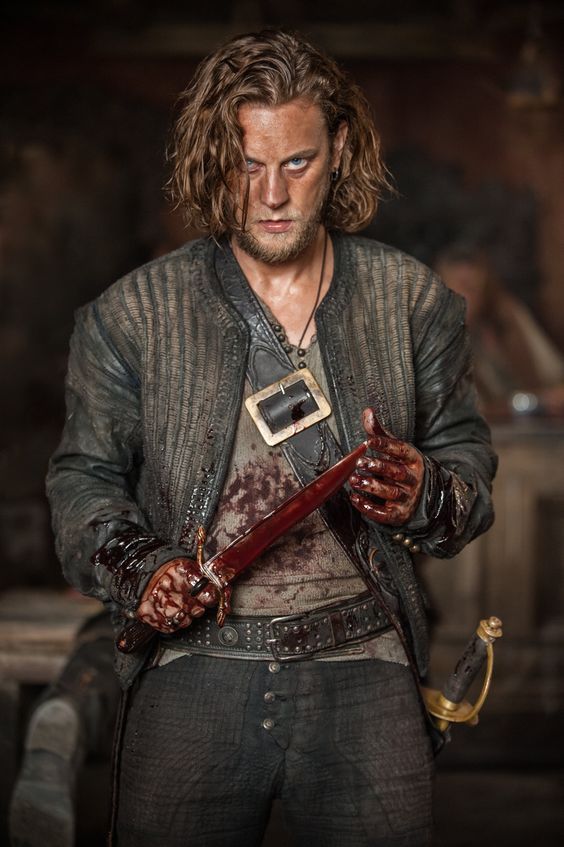
Low’s path to piracy began with a mutiny gone wrong: a musket fired at a captain, a man shot through the throat, and a gang of twelve desperate men forced to flee into the open sea. Within days, Low seized a sloop off Rhode Island and declared war “against all the world,” stitching together the beginnings of a fleet that would soon terrorize every corner of the Atlantic. He operated off New England, Nova Scotia, the Azores, and the Caribbean, capturing at least a hundred ships — and burning most of them. His reputation grew faster than his fleet. Sailors whispered that Low’s laughter was worse than his rage, because both ended the same way: with screams.
By October 1720, his arrival in the Caribbean was less an event and more an omen. Low was already notorious for torturing victims before killing them — tying matches between their fingers and burning flesh to the bone, slashing off lips and forcing men to eat them, mutilating captives for sport. Sir Arthur Conan Doyle would later call him “savage and desperate,” a man of “amazing and grotesque brutality,” and The New York Times wrote that his methods rivaled the darkest days of the Spanish Inquisition. Even his own crew described him as “a maniac and a brute.”
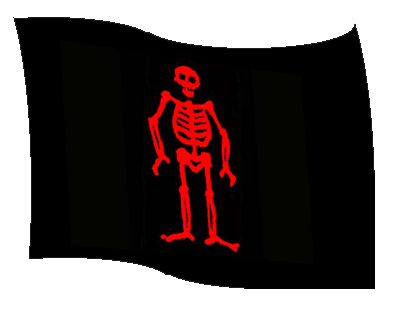
And yet, for all his savagery, Low possessed a cunning that made him more than a brute. He commanded multiple ships at once, sometimes three or four, shifting between them as circumstances demanded. He hoisted false colors, tricked merchantmen into lowering their guard, and cultivated terror as a deliberate strategy — knowing that a reputation for brutality made surrender more likely and resistance rarer. His flags became infamous: a red skeleton on black, a green trumpeter calling his captains to council, symbols that turned the horizon into a threat.
This was the season when Ned Low’s shadow fell across the islands — when the Caribbean learned that some storms do not pass quickly, and some men are born only to ruin. His cruelty was not a rumor. It was a fact, recorded in trials, newspapers, and the terrified testimonies of survivors. And in the months ahead, the Scourge of the Seven Seas would discover that even the most vicious pirate eventually meets a reckoning.
Mates…stay far, far away from Ned Low!
Til next time, Fair Winds!
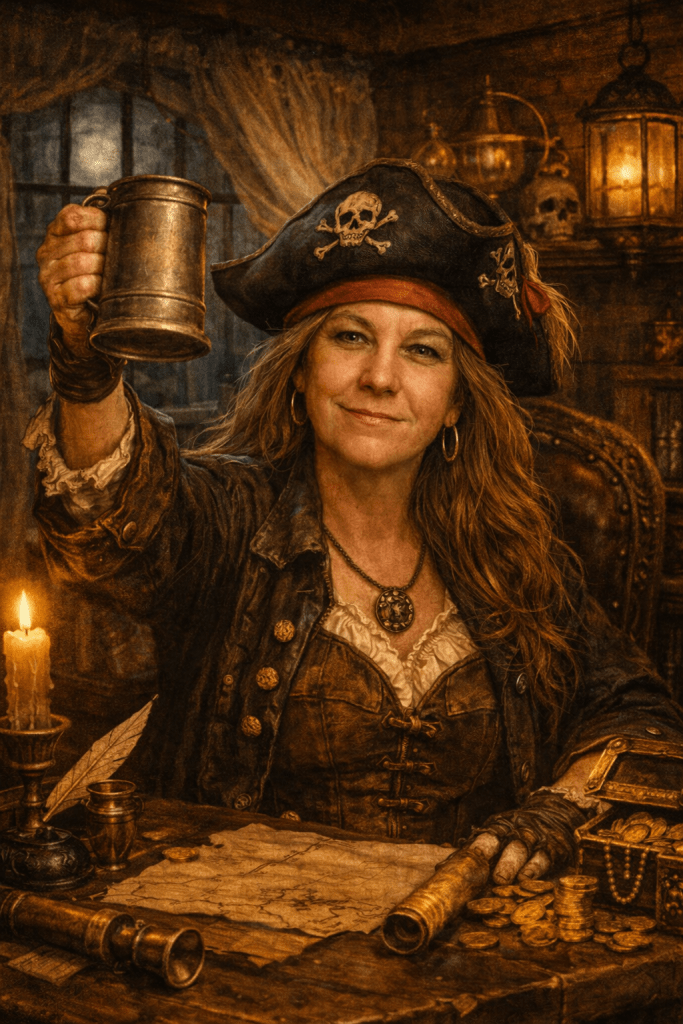
To the ghosts that guide us, the storms that test us, and the gold that waits for those who dare — may our ink never run dry and our courage never fade. Raise your tankards, mates… for the sea still remembers our names.
 Virginia Chandler
You must be logged in to post a comment.