Before Blackbeard became the terror of the Carolinas, before the smoke‑braided beard and the roaring theatrics, before Ocracoke carved his legend into the bone of history — there were three men who witnessed his rise from a very different angle. Not as crew. Not as captains. Not as enemies.
But as surgeons.
Jean Dubou. Marc Bourgneuf. Claude Deshayes.
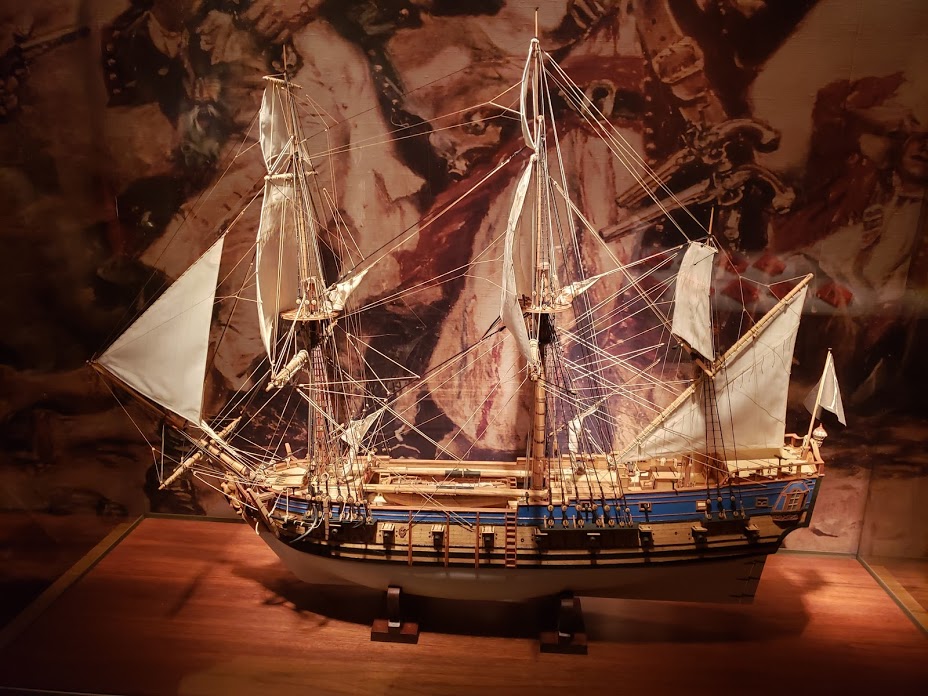
Three Frenchmen taken aboard La Concorde, a French slaver captured by Edward Thatch in late 1717. They were not volunteers. They were not pirates. They were the medical staff of a ship built for misery — and when Blackbeard claimed La Concorde as his own, he claimed them as well.
Most pirates had no surgeon at all. A crew might have a barber, a man who could stitch a wound or set a bone, but a trained surgeon? That was treasure rarer than gold. Blackbeard understood this. He didn’t just keep the surgeons — he needed them.
And so began one of the strangest relationships in pirate history: three unwilling healers bound to a captain who probably created wounds faster than they could mend them.

When Blackbeard transformed La Concorde into Queen Anne’s Revenge, the surgeons transformed with her. They treated scurvy, infections, broken bones, musket wounds, drunken brawls, and the endless injuries of men who lived by violence. They stitched up the same rogues who threatened them. They kept alive the same men who might kill them tomorrow.
And they were undoubtedly there on the Queen Anne’s Revenge— aye, present — for every major moment that followed.
They were aboard during the Charles Town blockade, when Blackbeard held the city hostage and demanded medicine.
They were most likely aboard when Queen Anne’s Revenge wrecked at Topsail Inlet, when Blackbeard abandoned most of his crew but assuredly kept the surgeons close.
They were likely with Thatch when he took the King’s Pardon in Bath, when he allegedly married, schemed, and drank himself into legend.
And they were almost certainly aboard when he sailed for Ocracoke — the final cruise, the last gamble, the doomed run that would end in blood and smoke.
Three surgeons. Three forced men. Three witnesses to the unraveling of Edward Thatch.

And then — they vanish.
No trial records. No execution lists. No depositions. No names in Maynard’s report.
Just silence.
This plunder begins their story — the quiet thread woven through the chaos of Blackbeard’s final months. The next plunder will follow them into Charles Town, where their skills became the reason Blackbeard demanded medicine at pistol‑point.
But for now, we stand at the beginning: three surgeons aboard a slaver, claimed by a pirate, bound to a fate darker than any of them could have imagined.
Sidenote: (Long one) How We Know Their Names
Jean Dubou, Marc Bourgneuf, and Claude Deshayes never appeared in English court records, pirate trials, or depositions after Blackbeard’s death. In fact, from the English side of history, the surgeons vanish completely. So how do we know who they were?
The answer lies not with Blackbeard, but with France.
La Concorde, the French slaver Blackbeard captured in 1717, kept meticulous crew manifests and medical certifications. French maritime law required slave ships to record every officer, sailor, and surgeon aboard, along with their wages and duties. These documents were archived in France and survived long after the ship was taken.
When Blackbeard captured La Concorde, the French captain later filed a formal deposition with colonial authorities in Martinique. In that report, he confirmed that Blackbeard kept several members of the crew — including the three surgeons.
Their names come from French naval archives, not English pirate records. That is why they appear clearly at the beginning of the story… and then disappear into silence as Blackbeard’s final months unfold.
To the ghosts that guide us, the storms that test us, and the gold that waits for those who dare — may our ink never run dry and our courage never fade. Raise your tankards, mates… for the sea still remembers our names.
 Virginia Chandler
You must be logged in to post a comment.