In the wake of Henry Every’s thunderous triumph, the English world reeled. The Mughal Empire demanded justice. The East India Company trembled. And London, desperate to prove it still held the reins of order, chose a man to hunt the pirates who had embarrassed a kingdom.
They chose Captain William Kidd.
At first, Kidd seemed the perfect answer — a respected privateer, a man with a reputation for discipline, and a captain who had once served the Crown with pride. He accepted the commission with confidence, believing he could walk the narrow line between lawful privateering and outlaw piracy.
But the sea has little patience for men who try to serve two masters.
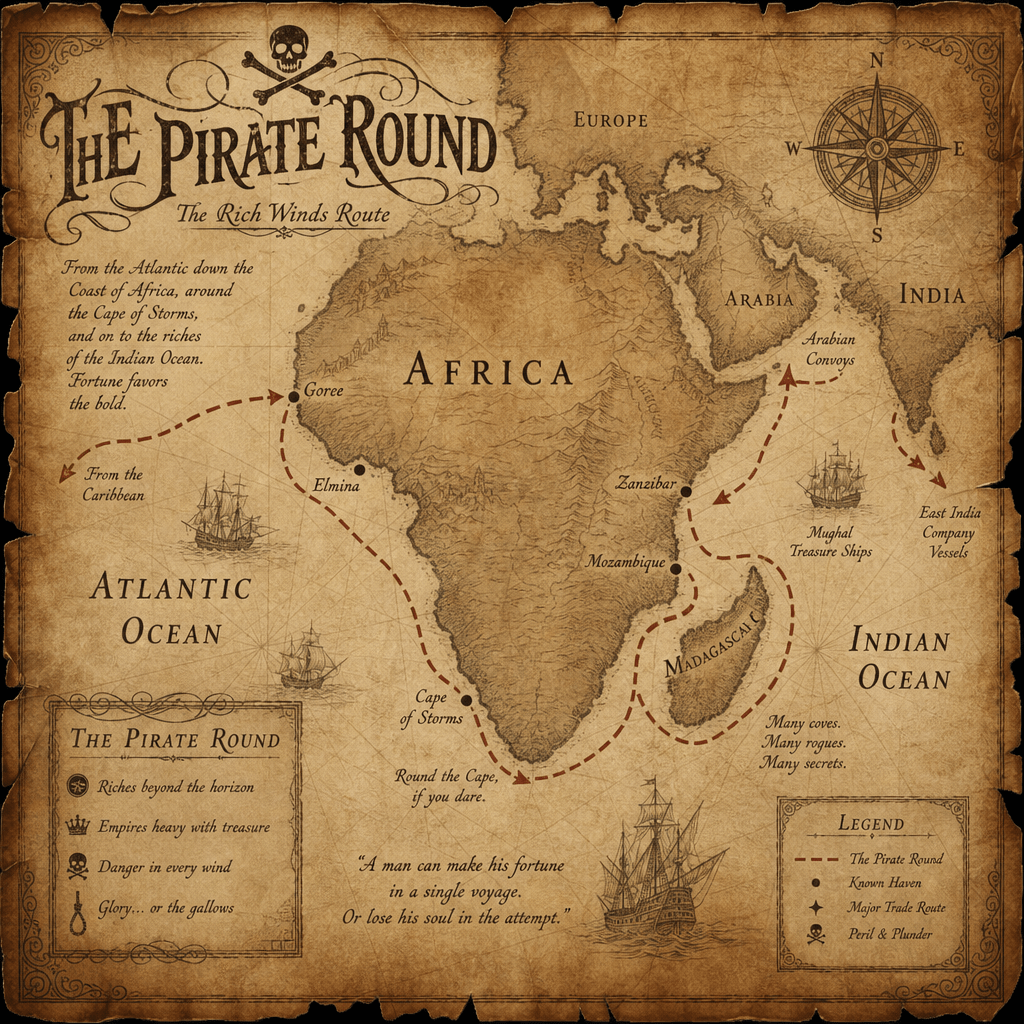
Kidd’s voyage began with promise: a fine ship, the Adventure Galley, and a crew eager for prize money. Yet the Round had changed. Every’s success had drawn rogues like sharks to blood, and the waters teemed with danger. Worse still, Kidd’s own crew grew restless. They wanted plunder — not patience, not diplomacy, not the slow grind of legal prize-taking.
Tension simmered.
Then it boiled.
The turning point came in 1697, when Kidd confronted a mutinous gunner named William Moore. Words turned to blows. Kidd struck Moore with an iron-bound bucket, and the man died the next day. It was a killing born of fury and fear — but it was the moment Kidd’s fate sealed shut like a coffin lid.
From that point on, every decision he made seemed to twist against him. He captured a few ships — some arguably legal prizes, some not — but the world had already decided his guilt. Rumors spread faster than truth. The Crown that had sent him out now distanced itself. The East India Company, eager to appease the Mughal Empire, painted him as a villain. And the pirates he was meant to hunt prospered while he struggled to keep his ship afloat.
By the time Kidd returned to the Americas, he was no longer a hunter. He was prey.
He hid treasure — or so the legends claim — on islands and in coves, hoping to bargain for his life. But no bargain could save him. He was arrested, shipped to London, and put on trial in a spectacle designed to soothe political wounds, not seek justice.
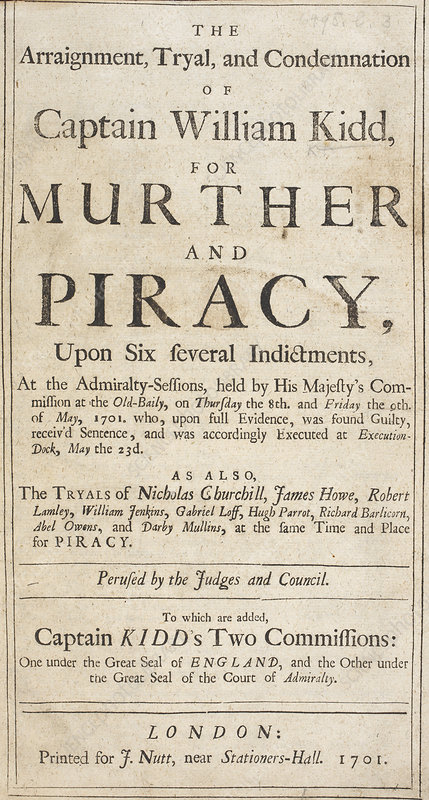
In 1701, William Kidd was hanged at Execution Dock. The rope snapped on the first drop — a grim omen — but the second held.
His body was tarred and hung in chains over the Thames as a warning to others who might dare to walk the line between crown and sea.
Sidenote: The rope broke once, as if the sea itself refused to take him. But the world above the tide had already decided his fate. William Kidd was not undone by piracy, but by the greed of men who feared losing their own gold. He hunted rogues for a crown that would not defend him — and became the warning they needed.
Yet the warning failed.
Kidd’s fall only fed the fire. The Pirate Round roared on, fueled by greed, desperation, and the knowledge that even a loyal man could be condemned as a rogue.
Kidd had set out to hunt pirates. He became the most famous one of all.
More Pirate Round coming!
Til next time, Fair Winds!

To the ghosts that guide us, the storms that test us, and the gold that waits for those who dare — may our ink never run dry and our courage never fade. Raise your tankards, mates… for the sea still remembers our names.
 Virginia Chandler
You must be logged in to post a comment.