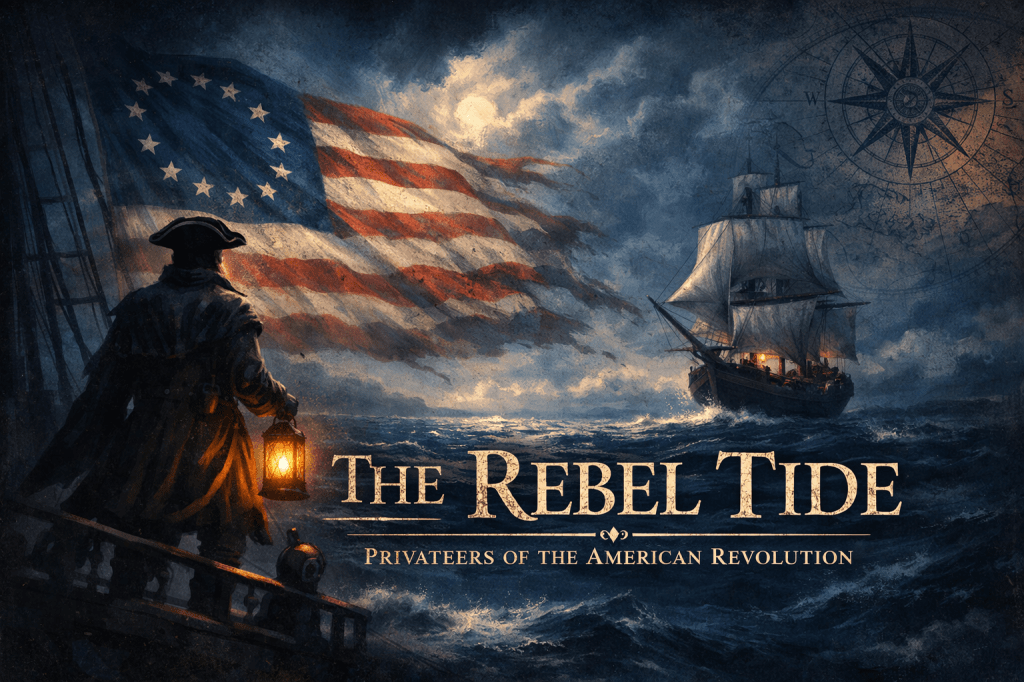
Ahoy, mateys! Bootstrap Ginny at the helm, and my crew and I have been feelin’ the pull of a new tide — a rebel tide. With the 250th anniversary of these United States upon us, it’s high time we honor the salty dogs who took to the seas not for kings, nor crowns, nor gilded thrones… but for freedom, and for the rights of ordinary folk to chart their own course.
Aye, these weren’t your typical pyrates — though they had the same fire in their bellies and the same salt in their blood. These were privateers, men who sailed under a newborn flag, striking blows against an empire and helping forge a nation from the deck of a ship.
So between now and July 4th, every Friday’s Plunder will be devoted to:
THE REBEL TIDE
Privateers of the American Revolution
So grab your grog, pack your pipe, and settle in close to the lantern.
James Fortune and the Black Prince
On the eve of celebrating our 250 years of snubbing ole King George, let’s take a final gander at the Rebel Tide of Revolutionary War privateers with a legendry Patriot Privateer ship and her captain.
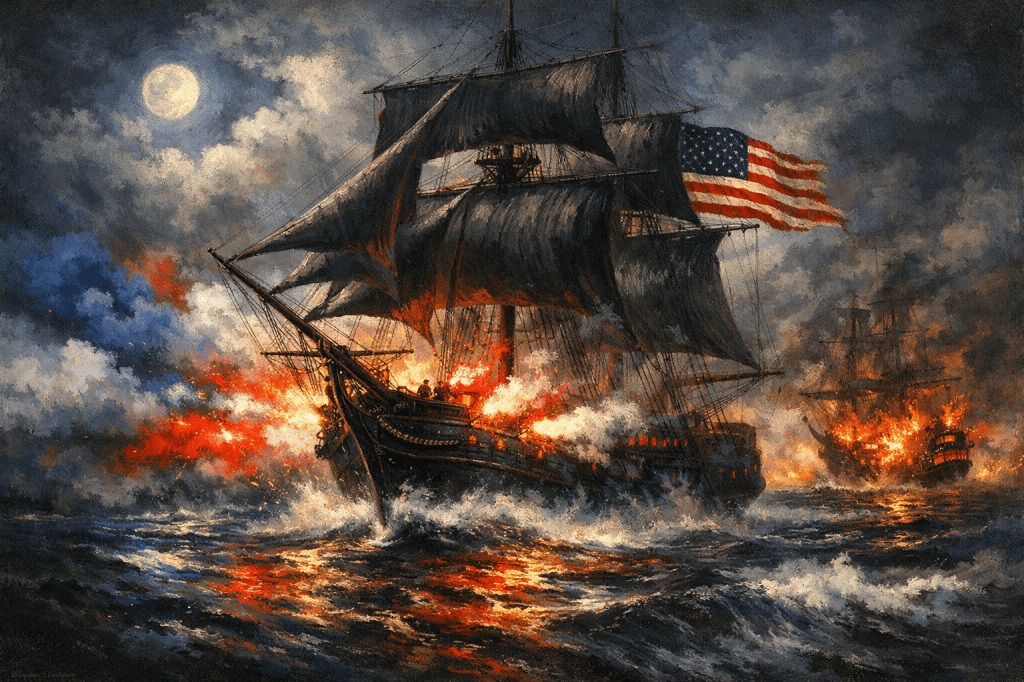
She wasn’t the armored prince entombed in Canterbury, but a living one — a shadow‑hulled predator under Captain James Fortune, prowling the Delaware like liberty’s own herald. Some swore she moved through the night like a phantom — not unlike the Lantern Wraith of later legend, the sea parting for her as if it already knew her name.
Sleek. Fast. Deadly. The Black Prince was Philadelphia’s answer to the British Empire, a vessel built not just for speed but for defiance. Her dark hull cut through fogbanks like a blade, and her crew knew the rhythm of battle the way a drummer knows the heartbeat of a march.
Captain Fortune wasn’t a polished officer or a gentleman of the court. He was a mariner forged by tide and toil — a man who understood that freedom often begins with a single act of refusal. And refuse he did.
The Black Prince struck British shipping with uncanny precision. She appeared out of mist like a whispered warning, her guns erupting in thunder that echoed across the Atlantic. Prize after prize fell to her, each one a blow against the empire tightening its grip on the colonies.
British captains cursed her name. Merchants prayed not to see her silhouette. American patriots cheered every time word of her victories reached the docks.
But what made the Black Prince truly unforgettable was timing.
In the summer of 1776 — as Congress debated independence, as the colonies held their breath — the Black Prince was already living the truth the Declaration would soon proclaim.
She was liberty in motion. A rebellion under sail. A promise carried on the wind.
On July 3rd, as the world teetered on the edge of a new nation, the Black Prince prowled the coast like the storm before the dawn. Her victories weren’t just tactical — they were symbolic. Proof that the colonies could stand, strike, and win.
Captain Fortune and his crew were the thunder before the fireworks, the living embodiment of a people who refused to kneel.
And so, on this eve of independence, we honor the ship that fought for freedom before freedom had a name.
The Black Prince sailed in darkness — so a nation could rise in light.
And so the Rebel Tide rises.
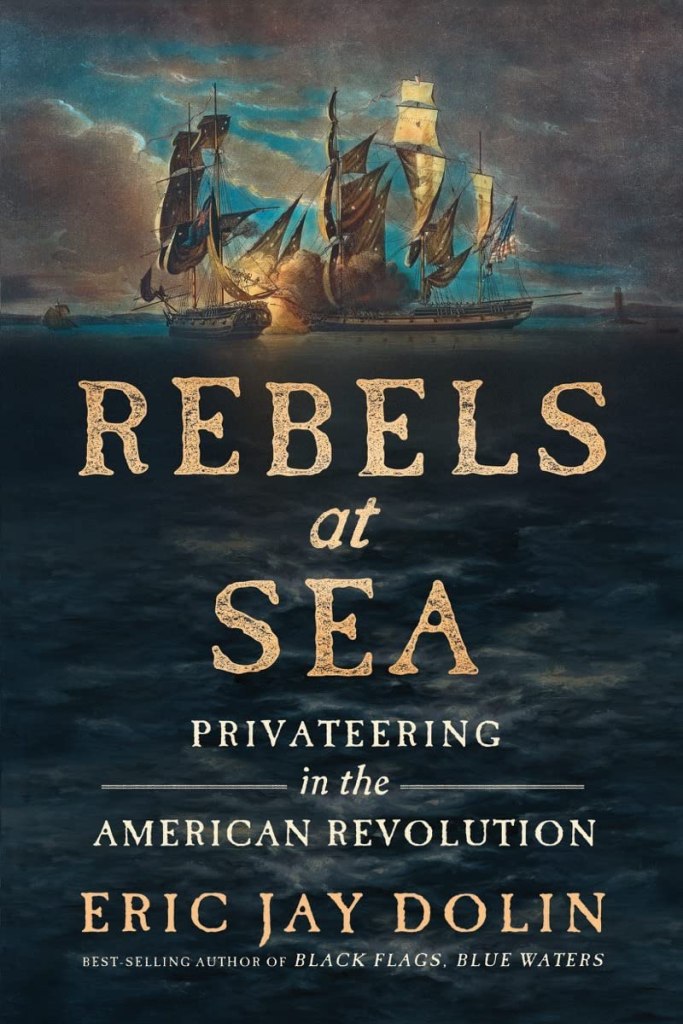
Historical insights for this Plunder were inspired by Eric Jay Dolin’s excellent book Rebels at Sea. Highly recommended for fellow lovers of maritime history.
Til next time, Fair Winds!
To the ghosts that guide us, the storms that test us, and the gold that waits for those who dare — may our ink never run dry and our courage never fade. Raise your tankards, mates… for the sea still remembers our names.
 Virginia Chandler
You must be logged in to post a comment.